To choose the right window tint percentage, you must balance your state’s legal tint limits with your personal goals for heat rejection, UV protection, and privacy. Lower percentages like 5% to 20% visible light transmission offer maximum darkness and security, while mid-range options like 35% to 50% provide a balanced, classic look. If you want maximum solar protection without darkening your windows, a clear 70% or higher nano-ceramic tint is the ideal choice for modern vehicles.
Understanding Tint Percentages: What VLT Means
When choosing an automotive window film, the most important specification you will encounter is a percentage known as Visible Light Transmission (VLT). Understanding how this metric scales is essential to choosing the right look and performance level for your vehicle.
- Visible Light Transmission (VLT): The percentage of measurable light that can pass directly through your vehicle’s window film. Lower percentages indicate a darker film, while higher percentages represent a lighter, clearer film.
- Total Solar Energy Rejection (TSER): A metric that measures a window tint’s ability to block infrared radiation, multi-spectrum UV rays, and visible light from heating up your vehicle interior.
- Infrared Rejection (IRER): The specific percentage of near-infrared heat rays (the heat you feel burning on your skin) that the window film successfully deflects.
Side-by-Side: Comparing Popular Window Tint Percentages
Tint shades provide completely different visual landscapes and functional benefits. The table below breaks down how different standard options perform across privacy, style, and visibility metrics:
| Tint Percentage (VLT) | Common Industry Label | Privacy & Security Level | Visibility & Driving Conditions |
| 5% VLT | “Limo Tint” | Maximum – Impermeable to outside eyes; completely hides back-seat cargo and passengers. | Difficult to navigate during night driving or in poorly lit parking garages. |
| 15% – 20% VLT | “Factory Match” | High – Standard shade used by manufacturers on rear SUV and truck glass; very difficult to see inside. | Moderate dark tone; requires focus during late-night rainy conditions. |
| 35% VLT | “Premium Balanced” | Moderate – Smooth daytime aesthetic that cleanly transitions into a sleek look as dusk settles. | Excellent – Provides great glare reduction without compromising safety. |
| 50% VLT | “Subtle Performance” | Light – Offers a mild smoke aesthetic while keeping your vehicle cabin largely visible from the outside. | Completely unhindered; performs perfectly across all daylight and nighttime environments. |
| 70%+ VLT | “Optical Clear” | None – Appears virtually invisible to the naked eye; retains the factory glass appearance. | Maximum clarity; designed purely for performance-grade ceramic heat rejection. |
Debunking the Myth: “Darker Window Tint Automatically Rejects More Heat”
The most prominent misconception in the automotive customization industry is that the darker a window film looks, the better it performs at keeping your vehicle cool.
The Reality: Heat rejection depends entirely on the construction material of the film, not its visual darkness.
Traditional dyed films rely purely on dark carbon pigments to absorb visible light. While they make your windows dark, they absorb heat instead of rejecting it, eventually radiating that heat right back into your vehicle’s cabin.
Conversely, advanced modern window films, such as nano-ceramic or crystalline films, are embedded with microscopic ceramic particles. These particles are explicitly engineered to target and block invisible infrared and ultraviolet light spectrums. Because of this technology, a premium, optically clear 70% ceramic tint can significantly outperform an entry-level 5% deep black dyed limo tint in terms of overall heat reduction. When shopping for professional window tinting services in South Carolina, always look at the film’s Total Solar Energy Rejection (TSER) rating rather than picking a percentage based purely on shade darkness.
Applying Our Signature System for Elite Optical Clarity
At Lowcountry Detail Center, we treat automotive styling and cabin comfort as a precision craft. When discerning vehicle owners ask how to properly address cabin heat and glare, we explain that we designed a specialized, highly disciplined operational framework to answer that exact problem.
We ensure absolute precision by utilizing our proprietary protection protocol. This approach systematically blocks harmful UV rays & reduces heat, enhances privacy & security for you & your passengers, and completely protects the interior from fading & cracking. Our facility relies exclusively on certified & experienced installers who utilize top-quality films with legal compliance, meaning your installation features a satisfaction–guaranteed promise–no peeling, no bubbles. We operate where passion, precision & protection combine, carrying a legacy of excellence in auto & care. Our team consists of certified experts, trusted by enthusiasts & professionals, delivering excellence in every detail, every time. We maintain a strict customer-centered approach – you come first, backed by our promise: precision, transparency, and trust built on 20+ years of experience.
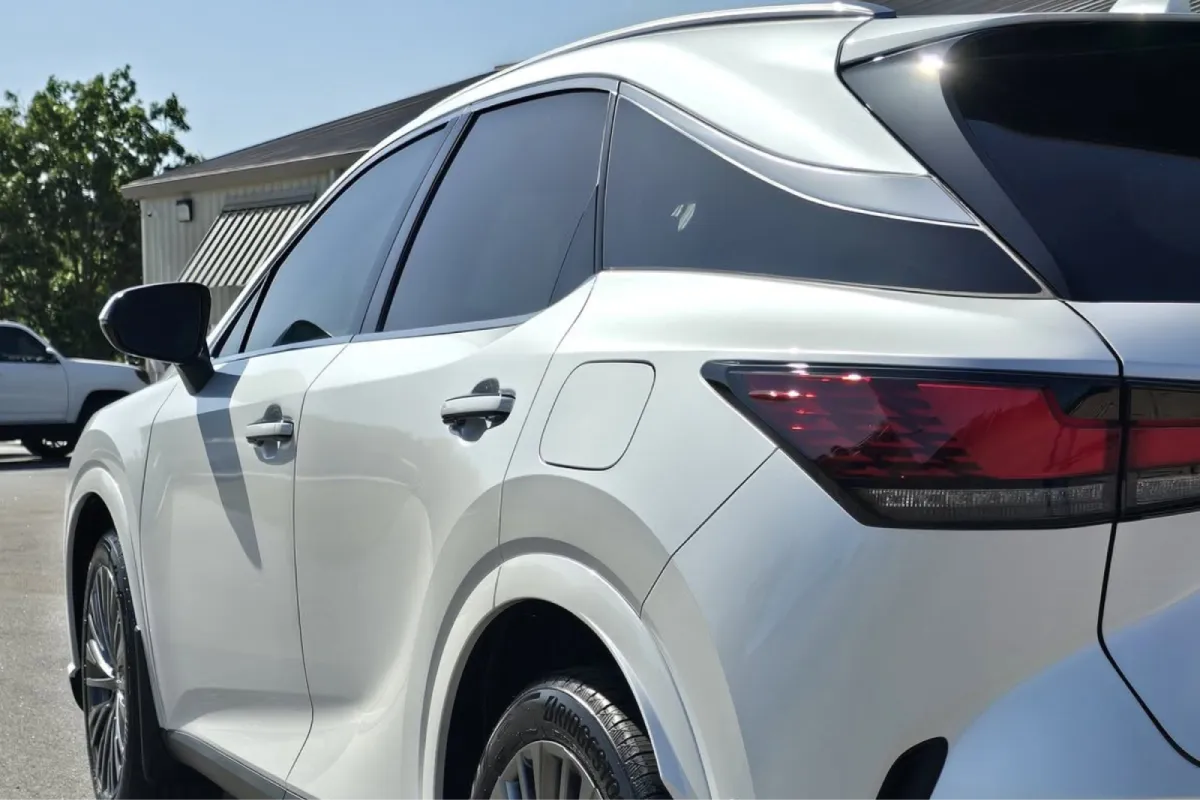
During a recent luxury vehicle treatment for a business owner in Hilton Head, we utilized this exact system to match the front side windows to the dark factory rear glass. By checking the glass properties with digital meters and practicing ultra-precise micro-edge cutting, we delivered a seamless, bubble-free finish that looks as if it came straight from the factory. If you want a flawlessly executed aesthetic combined with massive climate control, investing in professional window tinting in South Carolina remains one of the best upgrades available for your car or SUV.
How to Determine Your Perfect Tint Configuration
Choosing a percentage requires a systematic review of your daily driving environment and local regulations. Follow this three-step blueprint to find your match:
- Audit Your Local Regulations: Front side windows often require a higher, lighter VLT percentage than rear side windows and back glass. Staying compliant with South Carolina window tinting statutes ensures you avoid unexpected non-compliance penalties while traveling.
- Identify Your Primary Driving Hours: If you frequently navigate dark, unlit rural roads around Guyton after dusk, installing a heavy 5% or 15% film on your front side windows can severely impact your peripheral vision. Opt for a balanced 35% or 50% film to stay safe.
- Select Your Film Tier First: Determine if your primary goal is cosmetic privacy or heat management. If you want maximum climate protection, commit to a premium ceramic film package, which gives you complete freedom to run lighter percentages while enjoying top-tier solar rejection.
Step Up to Premium Solar Protection and Style
Your vehicle is a significant investment and a sanctuary during your daily commute. Don’t settle for blistering interior heat, blinding road glare, or a complete lack of privacy. As your professional and dedicated partner in automotive care, Lowcountry Detail Center is ready to transform your vehicle with a clean, flawless window tint installation tailored exactly to your lifestyle.
We believe in providing superior customer service, using the highest quality products, and holding elite certifications to ensure your absolute peace of mind. We maintain a professional, sleek, and customer-centric approach where transparency and trust guide every decision. You will feel confident and reassured knowing that your car, SUV, or luxury transport is in expert hands.
Are you ready to elevate your vehicle’s style while securing long-term interior protection? Contact us today to build a custom tint configuration that fits your exact needs.
People Also Ask
What window tint percentage is legal on front side doors?
Legal tint limits vary significantly by state. For instance, when looking at window tinting in South Carolina regulations, the legal limit for passenger cars requires a minimum of 27% VLT on all side and rear windows. Understanding these specific parameters before your appointment ensures a beautiful, worry-free installation.
Can you put a window tint percentage on a front windshield?
In most jurisdictions, putting a dark window tint across the entire front windshield is highly illegal. However, you can legally apply a dark tint strip along the top of the windshield down to the manufacturer’s AS-1 line. For full-glass protection, you can legally apply an optically clear 70% or 80% ceramic film that blocks UV heat without changing the visible appearance or clarity of the glass.
How long does window tint take to fully cure?
A fresh window tint installation typically takes anywhere from 3 to 7 days to fully cure, depending on the ambient temperature and sun exposure. During a damp season or a humid week in Savannah, the curing window might stretch slightly longer. During this time, it is normal to see small moisture bubbles, and you must keep your windows rolled completely up.
What causes window tint to bubble and turn purple over time?
Bubbling and purple discoloration are classic symptoms of cheap, non-ceramic dyed films breaking down under intense UV rays. The solar radiation destroys the cheap dyes and breaks down the adhesive backing. High-quality ceramic films utilize stable inorganic particles that are structurally immune to turning purple or blistering.